
Swing & Lift Non-Return Valves for Oil, Gas, Chemical & Power Systems
As a check valve manufacturer since 1985, CTGV produces industrial swing check valves and stainless steel lift check valves — also known as one-way valves or non-return valves (NRV) — engineered to prevent backflow in oil & gas, chemical, power, steel, and water systems. Built to API 6D, API 594, ASME B16.34, and BS 1868, in pressure classes from 150 to 2500.
Check Valve Series in Production
CTGV manufactures two production-ready check valve lines: full-port swing check valves for general high-flow service, and stainless steel lift check valves for aggressive media and small-bore precision. Both are built to API 6D, API 594, and ASME B16.34, pressure-tested, and supplied with full material certificates.

Full Port Double Flange Swing Check Valve
Opens automatically on forward flow and closes on reverse flow in horizontal or vertical-upward piping. Full-bore design delivers low pressure drop — ideal for water, oil, gas, and steam lines.
- StandardAPI 6D / 594 / ASME B16.34 / BS 1868
- Pressure ClassClass 150 – 2500 (PN10 – PN420)
- Body MaterialCarbon Steel, Stainless Steel, Ductile Iron
- SealsSoft Seal, Metal to Metal
- BoreFull Bore, Reduced Bore
- End ConnectionFlanged RF, RTJ, Butt Weld

Flanged Stainless Steel Lift Check Valve
Disc moves vertically along the channel centerline for reliable, leak-tight closure. Built in a full range of stainless and alloy steels for chemical, petrochemical, and high-pressure service.
- StandardAPI 6D / 594 / ASME B16.34 / BS 1868
- Pressure ClassANSI 150 – 4500
- Body MaterialA105, A182 F5/F9/F11/F22/F304/F316, A350-LF2
- SealsSoft Seal, Metal to Metal
- BoreFull Bore, Reduced Bore
- End ConnectionFlanged, Butt Weld, Socket Weld, Threaded
Check Valve Pressure Classes, Materials & End Connections
Engineers need numbers before they need marketing copy. Here is the working envelope of CTGV swing and lift check valves — pulled from our production data sheets, not generic catalog templates.
| Parameter | Range | Notes |
|---|---|---|
| Pressure Class (Swing) | Class 150 – 2500 (PN10 – PN420) | Full-port and reduced-port available |
| Pressure Class (Lift) | ANSI 150 – 4500 | For high-pressure precision service |
| Design Standard | API 6D, API 594, ASME B16.34, BS 1868 | Choose at order entry |
| Swing Body Material | Carbon Steel, Stainless Steel, Ductile Iron | Application-specific |
| Lift Body Material | A105, A182-F5/F9/F11/F22/F304/F316/F304L/F316L, A350-LF2 | Full stainless & alloy range |
| Seals | Soft Seal, Metal to Metal | Per service medium & temperature |
| Bore Type | Full Bore, Reduced Bore | Full bore for low pressure drop |
| End Connection | Flanged RF / RTJ, Butt Weld, Socket Weld, Threaded | Per piping spec |
| Inspection & Test | API 598, EN 12266, DIN 3230 | Shell, seat, and back-seat testing |
| Quality Certification | ISO 9001, ISO 14001, ISO 18001 | Certificates with every shipment |
Get a Quote in 2 Hours
Have Your Spec Sheet Ready?
Let's Confirm Your Check Valve.
Send us your line conditions — size, class, material, and end connection — and we'll return a full technical confirmation and price within 2 hours.
How Does a Check Valve Work?
A check valve is a self-actuating, one-way valve that opens under forward flow pressure and closes automatically when flow stops or reverses. There is no handwheel, no actuator, no operator input — line pressure does the work.
CTGV manufactures the two most widely specified check valve designs, plus we explain the others for reference:
- 1Swing check valve CTGV PRODUCT
Hinged disc swings open with forward flow and falls shut against a seat when flow reverses. Low pressure drop makes it the go-to choice for horizontal high-flow pipelines.
- 2Lift check valve CTGV PRODUCT
Guided disc lifts vertically off its seat for reliable, leak-tight closure. Higher fluid resistance makes it best suited to smaller-bore and high-pressure precision lines.
- 3Wafer / dual-plate check valve
Spring-loaded plates fit between two flanges, saving weight and installation length — common in compact piping systems.
- 4Ball / piston check valve
A moving ball or dashpot-damped piston for pulsating service — used in dosing and slurry applications to limit water hammer.
Check Valve vs. Gate, Globe & Butterfly Valve
Check valves work alongside other industrial valves in a complete pipeline system. Each valve type has its own purpose — knowing the difference helps engineers and procurement specify the right combination for the job. CTGV supplies all of them.
| Function | Check Valve | Butterfly Valve | Gate Valve | Globe Valve |
|---|---|---|---|---|
| Primary purpose | Prevent reverse flow | Compact isolation & control | Full open / close isolation | Throttle & regulate flow |
| Actuation | Self-actuating (line pressure) | Lever / gear / actuator | Manual / electric / pneumatic | Manual / electric / pneumatic |
| Pressure drop | Low (swing) to moderate (lift) | Low to moderate | Very low (full bore) | High (S-shaped flow path) |
| Typical position | After pumps & compressors | Large-diameter mains | Pipeline mains, equipment isolation | Process lines needing flow control |
| CTGV product page | You are here | View butterfly valves → | View gate valves → | View globe valves → |
⚠️ Swing vs. Lift Check Valve — choose a swing check valve for horizontal, high-flow lines where low pressure drop matters. Choose a lift check valve for smaller-bore, high-pressure, or precision service where tight shutoff is critical. CTGV manufactures both, so we recommend based on your actual line conditions, not what we happen to stock.
⚠️ Check Valve vs. Backflow Preventer — a check valve is a single-component, non-testable device; a backflow preventer (RPZ, DCV) is a tested assembly required by plumbing code for potable-water isolation. For industrial process lines, you almost always want a check valve.
Where CTGV Check Valves Work Hardest
Backflow risk shows up wherever a pump shuts down, a compressor cycles, or two pressure zones meet. CTGV check valves are specified across the heavy industries we've served since 1985 — from LNG to chemical to steel.
Oil & Gas
High-pressure, corrosive oil and gas pipelines and LNG lines. Corrosion-resistant materials reduce maintenance in sulfur-rich service.

Chemical Processing
Reactor feed, acid transfer, and solvent lines. Stainless A182 F304/F316 and alloy bodies resist aggressive media and prevent toxic backflow.

Power Generation
Main steam, feedwater, and cooling-water systems up to 600°C. Heavy-class check valves rated for thermal cycling and long maintenance intervals.

Steel
Blast furnace gas and process water systems. Large-diameter, abrasion-resistant designs hold up to high-temperature, dust-laden conditions.

Metallurgy
Non-ferrous refining and slag-water systems. Oxidation-resistant coatings protect against thermal shock in copper and aluminum production.

Water Supply & Drainage
Municipal water, wastewater, and pump stations. Low-leakage designs meet GB/T 12238 and international standards for sustainable infrastructure.

Factory-Direct Valve Manufacturing Since 1985
Behind every CTGV check valve is a vertically integrated production system — in-house casting, CNC machining, a full QC laboratory, and a dedicated R&D team. No middlemen, no subcontracting. Full traceability from raw material to your door.
What Sets Our Factory Apart

66,000㎡ factory — CNC machining centers, in-house casting & automated assembly
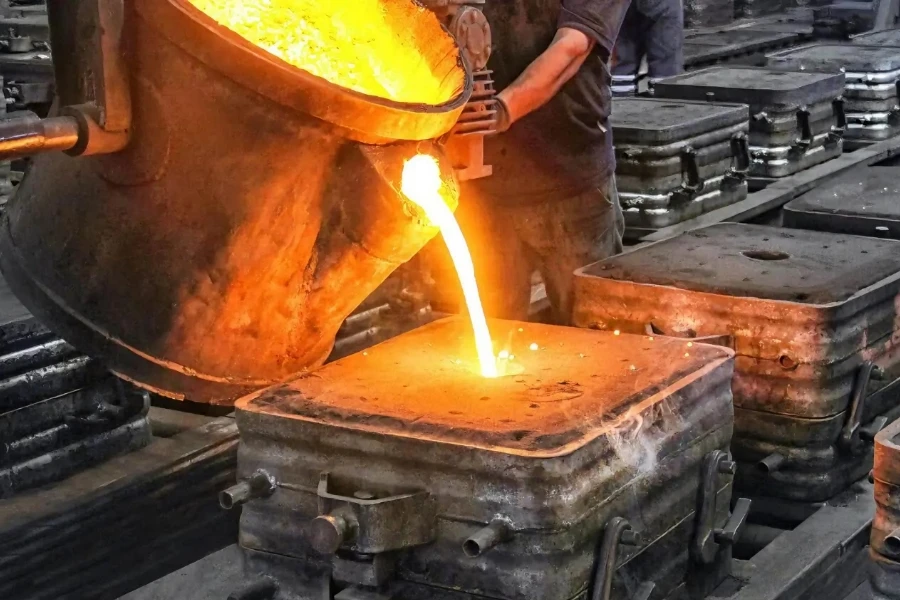
In-house casting

Pressure testing
In-house casting, CNC machining, surface treatment, and packaging — no outsourcing at any stage, full traceability from raw material to shipment.
Shell, seat & back-seat tests per API 598 and EN 12266. 300+ inspection devices on site. Test reports and material certs supplied with every shipment.
Carbon steel, stainless, ductile iron and full alloy range. Custom bore, end connection, seal material, and trim — confirmed at quotation against your line conditions.
Dedicated export team. FOB / CIF / DAP. T/T and L/C accepted. Mixed-model ordering for distributors and stockists.
Certified to API, ISO & International Standards
Every CTGV check valve is manufactured and tested against the standards that matter to your project engineer, your third-party inspector, and your procurement office. Certificates are issued with every shipment — not on request.


One-Stop Supply for Distributors, EPC & OEM Brands
Whether you're stocking valves for resale, sourcing a multi-valve package for a construction tender, or private-labeling under your own brand — CTGV is set up to support all three. Flexible MOQ, OEM/ODM options, and third-party inspection coordination.
Custom branding, packaging, and nameplate stamping for distributors and private-label buyers.
Multi-valve packages with MRs, material reports, test certs, drawings, and TPI coordination.
Mixed-model ordering across valve types. Low minimums for stockists trialing new SKUs.
Export crating, full shipping docs, T/T and L/C accepted. 99% on-time delivery record.

Valve World Expo 2024 — Düsseldorf, Germany
From Inquiry to Shipped Order

Neftegaz 2024 — Moscow, Russia
Frequently Asked Questions about Check Valves
What is a check valve used for?
What's the difference between a swing and a lift check valve?
What's the difference between a check valve and a non-return valve?
Which direction does a check valve install?
What materials are available?
What pressure classes do you offer?
Are CTGV check valves certified?
Do you support OEM branding and project tenders?
Learn More About Industrial Valves
Full Port Double Flange Swing Check Valve
Low-pressure-drop swing check valve for high-flow water, oil, gas, and steam pipelines.
Flanged Stainless Steel Lift Check Valve
Stainless and alloy lift check valve for aggressive media and high-pressure precision service.
Valve Knowledge & Selection Guides
Technical articles on valve selection, testing, and industrial applications.
Browse all valve articles → or download our catalog →