
Globe Valve Manufacturer & Supplier
Precision Flow Control · China Factory · Since 1985
CTGV has manufactured globe valves, angle globe valves, and Y-pattern globe valves in Wenzhou, China since 1985. Every unit delivers precise throttling and flow control for steam, oil & gas, chemical, and power generation applications. 1/2″–8″, Class 150–600LB, WCB / CF8 / CF8M, API 6D certified, with API 598 test reports on every shipment.
WCB · Class 150–600LB

1/2″ – 8″ (DN15–DN200)
Class 150–600LB
WCB / CF8 / CF8M
How Does a Globe Valve Work?
A globe valve controls flow using a movable disc (plug) that seats against a stationary ring seat inside the valve body. Rotating the stem moves the disc up or down — providing precise linear throttling that gate and ball valves cannot match.
Key Operating Features
- ✓Throttling Capability: Disc travel gives excellent flow-coefficient (Cv) control at any position.
- ✓Bi-directional Sealing: Metal or soft disc/seat gives Class IV–V shutoff.
- ✓Backseat Protection: Full-open position isolates the packing box for safe online repacking.
- ✓Renewable Internals: Disc and seat are field-replaceable without pipe removal.
- ✓Actuator-Ready: Rising stem accepts pneumatic, electric, or hydraulic actuators.
Choose a globe valve for throttling, modulating, or frequent cycling — steam tracing, chemical dosing, cooling-water control. Gate and ball valves are isolation-only.
Globe valves are available with handwheel, gear, pneumatic, and electric actuators — making them compatible with both manual station control and automated process loops. Their compact face-to-face length (ASME B16.10) fits standard line spacing without re-piping.
Globe Valve Parts Diagram
Cross-section showing the Z-flow path
The Z-shaped flow path forces media up through the seat and back down, so the disc seats parallel to the flow. This geometry is what gives a globe valve its precise throttling — but also its higher pressure drop versus a straight-through gate or ball valve. Raising the stem lifts the disc off the seat in fine increments, giving stable flow control at any opening.
Explore Our Globe Valve Range
CTGV produces three industrial globe valve lines covering the full spectrum from standard throttling service to zero-emission and high-angle applications. All models ship with full material traceability, pressure test reports, and API 598-certified test certificates.
Straight Pattern Globe Valve
The workhorse of throttling applications. T-pattern body with renewable seat and disc for precise flow regulation in steam, oil & gas, and chemical pipelines.
- Size: ½″ – 8″ (DN15–200)
- Class: 150LB – 600LB
- Body: WCB, WC6, CF8, CF8M, CF3M
- Standards: ANSI B16.34, BS 1873, API 598
- Operation: Handwheel, Pneumatic, Electric

Bellows Sealed Globe Valve
Dual-seal design (bellows + backup packing) prevents fugitive stem emissions on hazardous media. Preferred for toxic, corrosive, and high-purity chemical service.
- Size: ½″ – 4″ (DN15–100)
- Class: 150LB – 600LB
- Body: WCB, CF8M, CF3M
- Standards: ANSI B16.34, DIN 3356, API 598
- Fugitive emission: ISO 15848-1 tested

Angle Globe Valve
90° body geometry reduces turbulence and pressure drop by up to 30% vs. straight-pattern design. Ideal for slurry, high-viscosity media, and condensate service.
- Size: ½″ – 6″ (DN15–150)
- Class: 150LB – 600LB
- Body: WCB, CF8M, CF3M, WC6
- Standards: ANSI B16.34, BS 1873
- Operation: Handwheel, Pneumatic, Electric
Globe Valve Pressure Classes, Materials & End Connections
Engineers need numbers before they need marketing copy. Here is the working envelope of CTGV globe valves — pulled from our production data sheets, not generic catalog templates.
| Parameter | Straight Pattern | Bellows Sealed | Angle Globe | Standard Reference |
|---|---|---|---|---|
| Size Range | ½″ – 8″ (DN15–200) | ½″ – 4″ (DN15–100) | ½″ – 6″ (DN15–150) | ASME B16.34 |
| Pressure Class | 150LB – 600LB (PN16–PN100) | ASME B16.34 / DIN | ||
| Body Materials | WCB, WC1, WC6, WC9, CF8, CF3, CF8M, CF3M | WCB, CF8M, WC6 | ASTM A216/A351 | |
| Trim Materials | 13Cr (SS410), 316SS, Stellite 6 hard-faced | API 623 | ||
| End Connections | RF / FF Flange, BW (Butt Weld), SW, NPT | ASME B16.5 / B16.25 | ||
| Face to Face | ASME B16.10, EN558-1 | ASME B16.10 | ||
| Leakage Class | Class IV (soft seat), Class V (metal seat) | ANSI/FCI 70-2 | ||
| Test Standard | Shell, seat & backseat per API 598 | API 598 / EN 12266 | ||
| Design Standards | ANSI B16.34, BS 1873, API 623, DIN 3356 | Multiple | ||
| Actuation | Handwheel, Worm Gear, Electric, Pneumatic, Hydraulic | — | ||
| Operating Temp | -29°C to 450°C | -29°C to 350°C | -29°C to 450°C | Per material grade |
| Certifications | CE, API 6D, API 6FA, SIL3, EAC, ISO 9001 | Multiple | ||
Have Your Spec Sheet Ready?
Let's Confirm Your Globe Valve.
Tell us size, pressure class, material, media, and actuation. Our engineering team will confirm availability, lead time, and pricing within 2 hours.
Globe Valve vs. Gate Valve vs. Ball Valve
Choosing the wrong valve type is the most common spec error. Globe valves dominate throttling service; gate and ball valves are isolation-only. Here is the side-by-side breakdown your procurement engineer needs.
| Feature | Globe Valve ✓ | Gate Valve | Ball Valve |
|---|---|---|---|
| Primary Function | Throttling & Flow Control | Isolation Only | Isolation Only |
| Flow Regulation | Excellent | Poor (causes erosion) | Poor (quarter-turn) |
| Pressure Drop | Higher (Z-flow path) | Lowest (straight-through) | Low (straight-through) |
| Opening / Closing Speed | Slow (multi-turn) | Slow (multi-turn) | Fast (quarter-turn) |
| Shut-off Quality | Class IV–V | Class IV–V | Class VI (soft seat) |
| Frequent Cycling | Excellent | Poor (galling risk) | Good |
| Actuation (Automation) | Easy (linear) | Possible (linear) | Easy (quarter-turn) |
| Typical Application | Steam, dosing, cooling, bypass | Pipeline isolation | Pipeline isolation |
| Price Position | Mid | Low–Mid | Mid–High |
How to Choose the Right Globe Valve for Your Service
Specifying a globe valve means matching three variables to your process: the media, the operating pressure class, and the body material. Use the guide below to narrow your selection before requesting a quote — or send us your line conditions and we will spec it for you.
1. Match the Valve Type to Your Service
Find the condition closest to your application and expand it to see the recommended valve type, reason, and typical spec range.
Standard T-body handles high-temperature steam, and the renewable seat resists wire-drawing under continuous throttling. Available with integral bypass for high-ΔP start-up.
Welded bellows give zero fugitive emissions and ISO 15848-1 stem sealing. No packing to replace in service — eliminates the primary leak path on hazardous or VOC media.
The 90° body drains fully with no dead pockets and reduces pressure drop by up to 30% versus a straight-pattern body — ideal where solids settlement or scouring is a risk.
The extended bonnet keeps the packing gland clear of cryogenic temperatures, protecting the stem seal at operating temperatures down to −196°C.
The linear rising stem directly accepts pneumatic or electric modulating actuators without an adapter bracket, enabling stable closed-loop control at any opening from 0–100%.
2. Match the Pressure Class
3. Match the Body Material
Not sure which globe valve to specify?
Send us your line conditions — media, pressure, temperature, and size — and our engineers will recommend the right model and material grade.
Where CTGV Globe Valves Work Hardest
From superheated steam headers to cryogenic LNG service, CTGV globe valves regulate flow across the most demanding process environments. Below: where throttling performance matters most.
Steam Systems & Power Generation
Straight-pattern globe valves regulate steam flow in power plants, district heating, and boiler feedwater service. High-temperature WC6/WC9 bodies with stellite-faced trim handle superheated steam above 400°C and erosive high-velocity condensate on attemperator and turbine-bypass lines.
Oil & Gas Process
Globe control valves on bypass loops, pig launcher/receiver isolation, and wellhead flow regulation. Sour-service trim per NACE MR0175 is available for H₂S-containing media, with forged-steel bodies rated to Class 600 for high-pressure upstream and midstream duty.
Chemical & Petrochemical
Bellows sealed globe valves on toxic or corrosive lines where fugitive-emission limits apply. CF8M / CF3M bodies resist chloride attack.
Cryogenic / LNG
Extended-bonnet globe valves for LNG, LN₂, and LO₂ service to −196°C. Austenitic CF8 body, tested per BS 6364 and ASTM A 420.
Pharma & Food
316L stainless globe valves with mirror-polished internals for clean-in-place (CIP) and steam-in-place (SIP) cycles.
Water & HVAC
Cast-iron and bronze globe valves for cooling-water control, building HVAC, and district-heating balancing duty.
Factory-Direct Valve Manufacturing Since 1985
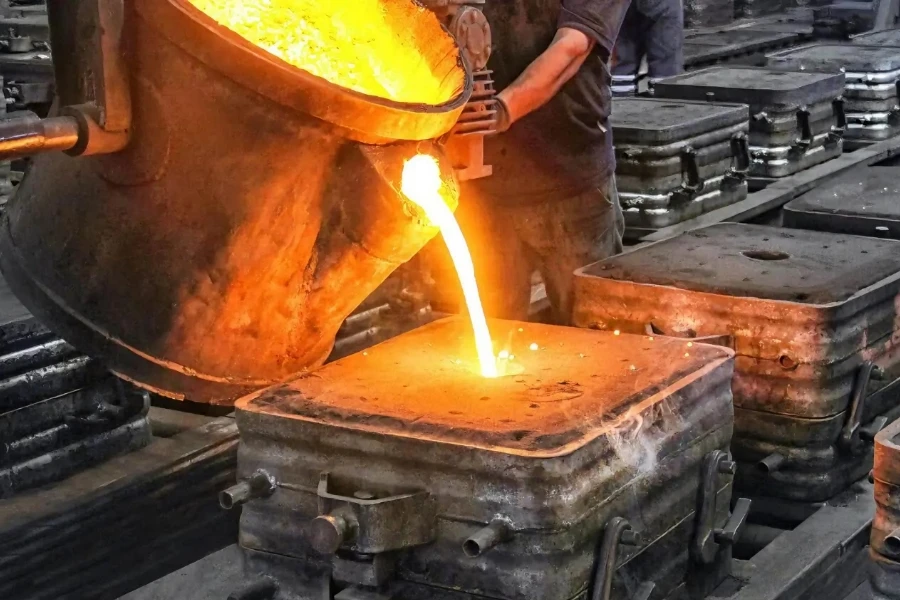
Behind every CTGV check valve is a vertically integrated production system — in-house casting, CNC machining, a full QC laboratory, and a dedicated R&D team. No middlemen, no subcontracting. Full traceability from raw material to your door.
Our Manufacturing Base


What Sets Our Factory Apart
In-house casting, CNC machining, surface treatment, and packaging — no outsourcing at any stage, full traceability from raw material to shipment.
Shell, seat & back-seat tests per API 598 and EN 12266. 300+ inspection devices on site. Test reports and material certs supplied with every shipment.
Carbon steel, stainless, ductile iron and full alloy range. Custom bore, end connection, seal material, and trim — confirmed at quotation against your line conditions.
Dedicated export team. FOB / CIF / DAP. T/T and L/C accepted. Mixed-model ordering for distributors and stockists.
Certified to API, ISO & International Standards
Every CTGV check valve is manufactured and tested against the standards that matter to your project engineer, your third-party inspector, and your procurement office. Certificates are issued with every shipment — not on request.


One-Stop Supply for Distributors, EPC & OEM Brands
Whether you're stocking valves for resale, sourcing a multi-valve package for a construction tender, or private-labeling under your own brand — CTGV is set up to support all three. Flexible MOQ, OEM/ODM options, and third-party inspection coordination.
Custom branding, packaging, and nameplate stamping for distributors and private-label buyers.
Multi-valve packages with MRs, material reports, test certs, drawings, and TPI coordination.
Mixed-model ordering across valve types. Low minimums for stockists trialing new SKUs.
Export crating, full shipping docs, T/T and L/C accepted. 99% on-time delivery record.


Frequently Asked Questions about Globe Valves
What is a globe valve and what is it used for?
A globe valve is a linear-motion valve with a T-shaped body where a movable disc seats against a stationary ring to regulate flow. It is the preferred valve type for throttling, flow control, and frequent on/off cycling in steam, chemical, oil & gas, and power generation systems. Unlike gate or ball valves — which are designed for isolation only — a globe valve can be set to any position between fully open and fully closed to achieve a specific flow rate.
Globe valve vs. gate valve: which should I specify?
Specify a globe valve when your application requires throttling, modulating, or frequent cycling. Specify a gate valve when you need straight-through flow with minimal pressure drop and the valve will only be operated fully open or fully closed. Using a gate valve for throttling causes disc erosion and seat damage. Common globe valve services: steam tracing, cooling water control, bypass regulation, chemical dosing. Common gate valve services: pipeline block valves, main isolation on large-bore lines.
What are the available globe valve sizes and pressure classes?
CTGV straight-pattern globe valves are available in ½″ through 8″ (DN15–DN200), Class 150LB to 600LB. Bellows sealed models cover ½″ to 4″, Class 150–600LB. Angle globe valves are available ½″ to 6″, Class 150–600LB. All sizes are stocked in WCB carbon steel; CF8 and CF8M stainless steel sizes typically ship within 4–6 weeks from our Wenzhou factory.
What is the lead time for CTGV globe valves?
Standard sizes in WCB (Class 150/300) typically ship within 2–3 weeks from stock. CF8M stainless steel and special trim configurations (stellite, hard-faced) require 4–6 weeks production. Large-bore (6″–8″) or high-pressure (Class 600) models require 6–8 weeks. We provide a confirmed delivery schedule at the time of quotation. Rush orders are accommodated on a case-by-case basis.
What is the minimum order quantity (MOQ)?
For standard catalog models there is no rigid MOQ — we supply everything from a single replacement valve to full project quantities. For custom trim, special materials, or OEM/private-label configurations, a minimum batch applies and is confirmed at quotation. Distributors stocking for resale receive tiered pricing by volume. Tell us your quantity and we'll quote the most favorable price break you qualify for.
Do you support OEM / private-label and ODM orders?
Yes. CTGV manufactures under buyer brands and supports ODM development. We can laser-mark or cast your logo and tag format on the body, supply neutral or custom packaging, and match your documentation template. For distributors and brand owners, this means selling under your own identity with our factory behind it. Provide your brand assets and marking spec at the time of order.
What documentation and certificates ship with each order?
Every shipment includes material test certificates (EN 10204 3.1 on request), API 598 pressure/seat test reports per valve, dimensional drawings, and the applicable ISO / API / CE certificates. For EPC and project orders we coordinate third-party inspection (SGS, BV, TÜV, Lloyd's) and provide full inspection & test plans (ITP) and certificate data books (CDB). Specify your documentation requirements in your RFQ.