
Spectacle & Line Blind Valve Manufacturer
Zero-Leakage Isolation · China Factory · Since 1985
CTGV has manufactured spectacle blind valves, line blind valves, and blind plate valves in Wenzhou, China since 1985. Every unit delivers positive, zero-leakage pipeline isolation — the safe standard for oil & gas, petrochemical, and power generation maintenance. DN50–DN300, PN ≤ 2.5 MPa, WCB / CF3M / CF8M, GB/T 600, with API 598 test reports on every shipment.
Flanged · DN50–DN300

DN50–DN300 (2″–12″)
PN ≤ 2.5 MPa
WCB / CF3M / CF8M
What Is a Blind Valve?
A blind valve — also called a blind plate valve or spectacle blind valve — is a positive-isolation device that completely blocks flow in a pipeline. Unlike a gate or ball valve, which can seep across the seat over time, a blind valve places a solid metal plate directly across the bore, guaranteeing true zero-leakage separation.
The valve body holds a rotatable or slidable blind plate. In the closed position, the solid disc seals the line for absolute shut-off; in the open position, a bored ring aligns with the pipe to allow full flow. Because the plate's position is visible from outside the valve, operators get a positive, fail-safe confirmation that the line is blinded — the single most important safety requirement before any downstream maintenance.
The term comes from the solid "blind" plate (no bore) that blocks the line — the same principle as a blind flange, but built into a permanently installed, quick-operating valve body instead of requiring bolt removal.
Also Known As
- Spectacle blind valve
- Line blind valve
- Blind plate valve
- Goggle valve
- Spade / paddle blind
Core Function
Positive, visible, zero-leakage isolation of a pipeline section for maintenance, inspection, or emergency shut-off.
Blind Valve Operating Principle & Isolation Mechanism
A blind valve isolates a pipeline by rotating a spectacle-shaped plate between two positions — one solid (blind), one bored (open). Here is the full line-blinding sequence that field operators follow.
Bored ring aligns with bore — flow passes through unobstructed.
Solid disc rotates across bore — zero leakage, visually confirmed.
The Line-Blinding Sequence
Depressurize & Drain
Isolate upstream with a block valve, then depressurize and drain the section to be blinded.
Release the Cam
Loosen the clamping mechanism (handwheel or gear) to free the spectacle plate inside the body.
Rotate the Plate
Turn the spectacle plate so the solid blind disc moves into the bore — a one-person operation taking minutes.
Re-clamp & Verify
Re-tighten the clamp for a tight seal, then confirm isolation visually from the plate's external position.
CTGV Blind Plate Valve — BI41F Series
Our flanged blind valve uses a rotatable blind-plate mechanism for fast, one-operator isolation. Each unit ships with material traceability, a pressure test report, and dimensional data to GB/T 600.
Flanged Blind Plate Valve (BI41F)
A rotatable blind-plate design that delivers true zero-leakage shut-off for gas, liquid, steam, and corrosive media. The sliding/rotating structure enables quick open-close with minimal effort, while the visible plate position prevents accidental operation during maintenance or shutdown.
Full Specifications & Design Standards
The BI41F flanged blind plate valve is available in DN50 to DN300 (NPS 2″–12″) with three pressure classes — PN 1.0, PN 1.6, and PN 2.5 MPa — covering low-pressure utility lines through high-pressure refinery service. Operating temperature range is −29°C to 150°C, suitable for gas, liquid, steam, and corrosive media.
Body material is WCB carbon steel for general process service, with CF3, CF3M, and CF8M stainless steel options for corrosive, chemical, or weld-sensitive applications. All variants share the same face-to-face dimension, so material upgrades require no piping modification.
The end connection is double-flanged, raised face (RF), with drilling patterns to ASME B16.5, DIN, or GB standards per order. The sealing principle is mechanical — a solid metal plate rotates across the full bore, eliminating any dependence on a seat or seal ring. This delivers true zero-leakage isolation that does not degrade with cycling.
Standard operation is by manual handwheel or worm gear. Electric, pneumatic, and hydraulic actuators are available for remote or automated service. The valve is designed and dimensioned to GB/T 600, with shell and seat tests per API 598 before shipment.
Need a Blind Valve for a Specific Line Size?
Send us your pipe diameter, pressure, and media — we will confirm material, model, and lead time within 2 hours.
Blind Valve vs. Blind Flange vs. Double Block & Bleed
For positive pipeline isolation, engineers choose between three methods. A blind valve combines the zero-leakage certainty of a blind flange with the speed of a valve — without the bolt-breaking labor or the seat-leakage risk of block valves.
| Factor | Blind Valve ✓ | Blind Flange / Spade | Double Block & Bleed |
|---|---|---|---|
| Isolation Integrity | Positive (zero leak) | Positive (zero leak) | Seat-dependent |
| Time to Operate | Minutes | 30–45 min (bolt-out) | Fast (turn valves) |
| Personnel Required | One operator | Two+ pipefitters | One operator |
| Visual Confirmation | Yes (plate position) | Yes (spade visible) | No (indirect) |
| Permanently Installed | Yes | No (removable) | Yes |
| Pipe Stress on Change | None | High (spreading) | None |
| Best For | Frequent blinding | One-off / long-term | Routine isolation |
How to Choose the Right Blind Valve
Specifying a blind valve comes down to three questions: how often you blind the line, what size and pressure the line runs at, and what media flows through it. Use the guide below to narrow your selection — or send us your line conditions and we will spec it for you.
1. Match the Type to How Often You Blind the Line
2. Match the Size & Pressure
3. Match the Body Material
Not sure which blind valve to specify?
Send us your line size, pressure, media, and how often you blind it — our engineers will recommend the right type, material, and actuation.
When to Specify a Blind Valve Over Other Isolation Methods
A blind valve gives you the zero-leakage certainty of a blind flange combined with the speed of a permanently installed valve. No unbolting, no pipe spreading, and one operator can switch the line in under a minute — with a visible plate position that satisfies any permit-to-work authority.
Zero-Leakage Guarantee
The solid metal plate physically blocks the bore — there is no seat, no seal to erode. Unlike gate or ball valves, positive isolation is mechanical, not pressure-dependent.
Under One Minute to Operate
A single operator rotates the spectacle plate in minutes without unbolting flanges — compared to 30–45 minutes for a blind flange change requiring two pipefitters.
Visible Isolation Status
The plate position is externally visible — the permit-to-work authority can confirm isolation at a glance before any downstream work, meeting OSHA and site safety requirements.
No Pipe Stress on Change
Because the valve is permanently installed between flanges, there is no need to spread the pipe gap — protecting flanges, gaskets, and pipe alignment during routine blinding cycles.
WCB & Stainless Options
BI41F available in WCB carbon steel for general service and CF3 / CF3M / CF8M stainless steel for corrosive, toxic, or hygienic media — same body dimensions, same installation footprint.
Actuator-Ready
Manual handwheel is standard. Electric, pneumatic, and hydraulic actuators are available for remote operation, large-bore service, or automated shutdown sequences.
Where CTGV Blind Valves Are Used
Blind valves are specified anywhere a pipeline must be positively isolated for safe maintenance — especially on hazardous gas and corrosive media where seat leakage is not acceptable.
Positive isolation of process lines during turnaround maintenance — the core use case, where one operator can blind a line in minutes before vessel entry or hot work.
Blinding batch and reactor lines carrying toxic or corrosive media before vessel entry or equipment isolation.
Large-bore goggle valves on blast-furnace and coke-oven gas mains, where positive gas shut-off is life-critical.
Isolation of steam, feedwater, and fuel-gas headers during boiler and turbine maintenance windows.
Blinding chemical recovery and digester lines for safe access during scheduled shutdowns.
Positive isolation at tank farms, manifolds, and transfer stations for inspection and tie-in work.
Factory-Direct Valve Manufacturing Since 1985
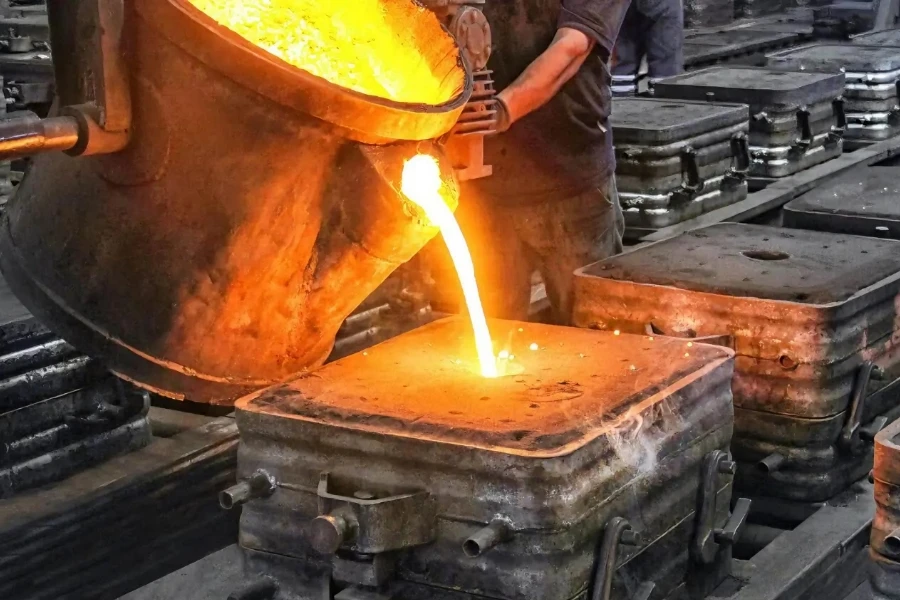
Behind every CTGV blind valve is a vertically integrated production system — in-house casting, CNC machining, a full QC laboratory, and a dedicated R&D team. No middlemen, no subcontracting. Full traceability from raw material to your door.
Our Manufacturing Base


What Sets Our Factory Apart
In-house casting, CNC machining, surface treatment, and packaging — no outsourcing at any stage, full traceability from raw material to shipment.
Shell, seat & back-seat tests per API 598 and EN 12266. 300+ inspection devices on site. Test reports and material certs supplied with every shipment.
Carbon steel, stainless, ductile iron and full alloy range. Custom bore, end connection, seal material, and trim — confirmed at quotation against your line conditions.
Dedicated export team. FOB / CIF / DAP. T/T and L/C accepted. Mixed-model ordering for distributors and stockists.
Certified to API, ISO & International Standards
Every CTGV blind valve is manufactured and tested against the standards that matter to your project engineer, your third-party inspector, and your procurement office. Certificates are issued with every shipment — not on request.


One-Stop Supply for Distributors, EPC & OEM Brands
Whether you're stocking valves for resale, sourcing a multi-valve package for a construction tender, or private-labeling under your own brand — CTGV is set up to support all three. Flexible MOQ, OEM/ODM options, and third-party inspection coordination.
Custom branding, packaging, and nameplate stamping for distributors and private-label buyers.
Multi-valve packages with MRs, material reports, test certs, drawings, and TPI coordination.
Mixed-model ordering across valve types. Low minimums for stockists trialing new SKUs.
Export crating, full shipping docs, T/T and L/C accepted. 99% on-time delivery record.


Frequently Asked Questions about Blind Valves
What is a blind valve and what is it used for?
A blind valve — also called a blind plate valve or spectacle blind valve — is a positive-isolation device that places a solid metal plate across a pipeline bore to completely block flow. It is used to safely isolate a section of pipe for maintenance, inspection, or emergency shut-off, guaranteeing true zero-leakage separation that gate or ball valves cannot reliably provide over time. Common in oil & gas, petrochemical, power, and steel-industry gas mains.
What is the difference between a spectacle blind and a line blind valve?
A spectacle blind is a figure-8 plate bolted between two flanges — to change its position you unbolt the flanges, rotate the plate 180°, and re-bolt. A line blind valve builds that same spectacle plate into a permanently-installed valve body with a cam mechanism, so the plate can be switched from open to blinded in under a minute by one operator without removing any bolts. Both give positive, visible isolation; the line blind valve is faster and safer for frequent blinding.
How does a blind valve achieve zero-leakage isolation?
Instead of relying on a seat seal (which can erode or seep), a blind valve rotates a solid blind plate directly across the full bore. With no flow path through the plate, there is nothing for the media to leak past. The plate's external position gives operators a positive visual confirmation that the line is blinded — the key safety requirement before any downstream work.
When should I use a blind valve instead of a blind flange?
Use a blind valve when a line is blinded frequently — it switches in minutes with one operator and no bolt removal or pipe stress. Use a blind flange or spade for one-off or long-term isolation where the line is rarely changed, since it is lower-cost but requires breaking the flange joint (two pipefitters, 30–45 minutes) each time. For routine, safety-critical blinding in refineries and gas plants, the blind valve is the standard.
What sizes and pressure ratings does CTGV offer?
CTGV flanged blind valves (BI41F series) are available in DN50–DN300 (NPS 2″–12″), rated to PN ≤ 1.0, 1.6, or 2.5 MPa, in WCB carbon steel and CF3 / CF3M / CF8M stainless steel. Operating temperature range is −29°C to 150°C. Larger-diameter goggle / blind plate valves for blast-furnace gas service are available on a custom-engineered basis — contact us with your line conditions.
Can blind valves be automated?
Yes. While many blind valves are manually operated (lever or worm-gear), CTGV supplies electric, pneumatic, and hydraulic actuation for remote or large-bore service. Automated goggle valves are common on blast-furnace gas mains and other large-diameter lines where manual operation would be impractical. Specify your drive preference at the time of inquiry.
What media can a blind valve handle?
Blind valves handle gas, liquid, steam, and corrosive media. Material selection follows the service: WCB carbon steel for general media, and CF3 / CF3M / CF8M stainless steel for corrosive or hygiene-sensitive applications. Because the isolation is mechanical (a solid plate), blind valves are especially valued on toxic, flammable, and hazardous gas lines where positive shut-off is a safety requirement.
What is the lead time and minimum order quantity?
Standard BI41F sizes in WCB ship within 3–4 weeks; CF3M / CF8M stainless and large-bore custom units require 5–7 weeks. There is no rigid MOQ for catalog models — we supply from a single replacement valve to full project quantities. Custom materials or OEM configurations carry a minimum batch confirmed at quotation, and distributors stocking for resale receive tiered volume pricing.
Do you support OEM / private-label blind valve orders?
Yes. CTGV manufactures under buyer brands and supports ODM development — custom body marking, neutral or branded packaging, and documentation matched to your template. For distributors and brand owners this means selling blind valves under your own identity with our factory behind it. Provide your brand assets and marking spec at the time of order.
What documentation ships with each blind valve order?
Every shipment includes material test certificates (EN 10204 3.1 on request), API 598 pressure/seat test reports, dimensional drawings to GB/T 600, and applicable ISO / CE certificates. For EPC and project orders we coordinate third-party inspection (SGS, BV, TÜV) and provide full inspection & test plans (ITP) and certificate data books. Specify your documentation requirements in your RFQ.