


Quick Answer
A high-pressure ball valve controls intense liquid or gas flow with a tight seal and minimal pressure loss, using a rotating spherical ball. Built from durable materials, these valves handle up to 6000 PSI, featuring trunnion mounts, full-bore design, and dual seals. They are essential in oil, gas, chemical, and power industries for reliable, leak-free operation.
A high pressure ball valve controls the flow of liquids or gases under intense pressure while maintaining a tight seal and minimal flow loss. Its design allows safe and efficient operation across demanding environments like oil and gas, power generation, and chemical processing.
What Is a High-Pressure Ball Valve?
A high pressure ball valve is engineered to handle extreme pressure conditions while maintaining precise control over flow. It consists of a spherical ball with a central bore that rotates within the valve body. When aligned with the flow path, the bore allows free passage; when rotated 90 degrees, it fully blocks the medium.
Materials such as stainless steel, carbon steel, and high-grade alloys are used to ensure resistance against corrosion and deformation. Depending on design and material, these valves can handle working pressures ranging from 150 PSI to over 6000 PSI.
CTGV high-pressure ball valves are designed for up to Class 2500 ratings, featuring reinforced trunnion stems and double-seal seats. With over 40 years of manufacturing experience, CTGV delivers valves that perform under the toughest pressure cycles, ensuring zero leakage and long service life.
Browse our full range of ball valves here.

Is a Ball Valve Good for High-Pressure?
Yes. A ball valve is ideal for high-pressure systems due to its robust structure and reliable sealing. Trunnion-mounted designs, often used in high-pressure setups, distribute pressure evenly across seats and reduce operational torque. This design prevents wear and enables smooth operation even during rapid pressure fluctuations.
The double-seal arrangement further ensures tight shutoff under both static and dynamic conditions, preventing leakage. For industrial pipelines that experience frequent start-stop cycles, these valves offer consistent performance without compromising flow capacity.
What Are The Design Features of High Pressure Ball Valves?
1. Trunnion-Mounted Ball
Larger ball valves often use trunnion supports to absorb line pressure and minimize stem torque. This design improves control and extends seat life under high operating loads.
2. Full-Bore Construction
A full-bore passage minimizes pressure drop and allows unrestricted flow. This makes the valve suitable for systems requiring maximum throughput with minimal resistance.
3. Blowout-Proof Stem
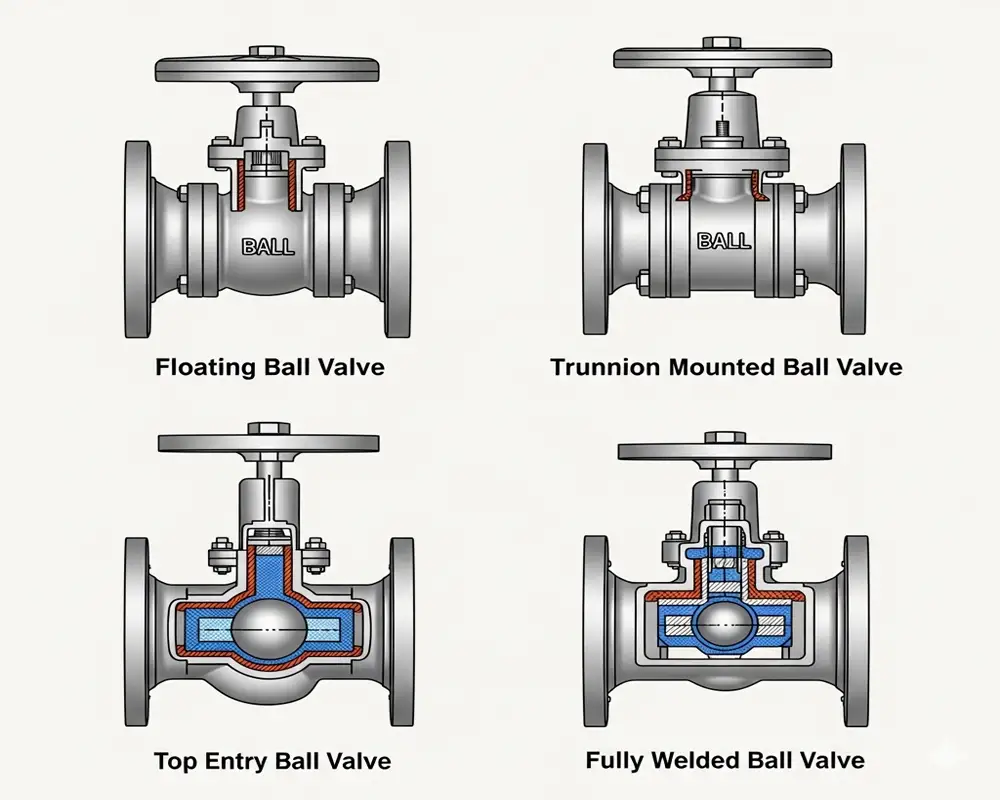
The stem is securely retained within the valve body, preventing it from ejecting under high-pressure conditions—an essential safety feature for process industries.
4. Dual Seal Design
Primary and secondary sealing surfaces provide redundancy, maintaining integrity even if one seal wears over time.
5. Fire-Safe and Anti-Static Design
In applications involving hydrocarbons, these fire-safe provisions prevent ignition and ensure operational reliability.
What Are The Properties of a High Pressure Ball Valve?
High-pressure ball valves are built for durability and consistent performance. Below are the defining properties that make them reliable in demanding environments.
- High pressure rating: They can sustain thousands of PSI without deformation, making them suitable for refineries, hydraulic systems, and power plants.
- Corrosion resistance: Stainless steel or nickel alloys resist corrosion in chemical and offshore environments.
- Temperature tolerance: Designed to operate from cryogenic levels to over 400°C, maintaining integrity in extreme thermal shifts.
- Tight shutoff: Precision-engineered ball and seat interfaces eliminate internal leakage.
- Low operating torque: Smooth operation reduces manual effort and actuator load, extending component life.
What Are The Industrial Applications of High Pressure Ball Valve?
Here are the different indutries where high pressure ball valve plays an essential role:
Oil and Gas
High-pressure ball valves regulate the flow of crude oil, natural gas, and refined products. They are used in upstream extraction systems, midstream transport lines, and downstream refining plants.
Chemical Processing
In chemical plants, these valves isolate hazardous fluids and maintain stable process flow, ensuring both safety and efficiency.
Power Generation
Steam and water regulation in turbines and boilers depends on valves that can withstand extreme heat and pressure without distortion.
Hydraulic Systems
Hydraulic circuits rely on these valves to control fluid direction and maintain system pressure. Their quick actuation and strong sealing make them ideal for industrial and mobile equipment.
What Are The Advantages of Using a High Pressure Ball Valve?
Here are the main benefits of using a high pressure ball valve in your factory:
- Low flow resistance: The full-bore design ensures near-zero pressure loss. Fluids flow smoothly through the valve, improving system efficiency and reducing energy consumption.
- Simple structure: A compact build with fewer parts reduces potential failure points. The design makes maintenance and replacement faster, even in large installations.
- Superior sealing: With high-performance seat materials like PTFE and PEEK, these valves deliver bubble-tight sealing, even under repeated high-pressure cycles.
- Ease of operation: A 90° turn fully opens or closes the valve, allowing quick isolation or control. This also makes it suitable for remote and automated systems.
How to I Select a High Pressure Ball Valve?
When selecting a high pressure ball valve, consider:
- Pressure class: Match the valve rating to your system’s maximum pressure.
- Temperature range: Verify that body and seal materials can handle expected thermal conditions.
- Material compatibility: Ensure the chosen alloy resists corrosion and erosion from process media.
- Operational frequency: Choose an actuator type suited to the system’s cycling rate.
- Certification: Always confirm compliance with API, EN or ISO testing standards.
Conclusion
A high pressure ball valve provides reliable performance where strength, precision, and safety are non-negotiable. It combines high flow efficiency with minimal leakage, making it ideal for applications from offshore platforms to hydraulic systems.
CTGV’s proven expertise and testing precision ensure every valve operates safely across high-pressure and high-temperature environments. Their trunnion-mounted, double-seal ball valves maintain consistent performance and zero leakage through decades of use.


