


Quick Answer
The article details the ball valve manufacturing process at CTGV, a company with in-house production and 20,000-ton annual capacity. The multi-step process includes material selection, CNC machining, assembly, rigorous pressure testing per ISO/API standards, surface coating, and final inspection. CTGV's vertically integrated, certified operations ensure high-quality, reliable valves for demanding industries like oil & gas, with a lifespan exceeding 20 years.
In the world of industrial fluid control, ball valves play a critical role in ensuring safe, efficient, and reliable operations. From oil and gas to power generation and chemical processing, these valves are known for their tight shutoff, low torque operation, and robust design. But behind every high-quality ball valve lies a sophisticated and carefully managed ball valve manufacturing process, one that combines advanced engineering, precision machining, and rigorous testing.
At CTGV, every valve reflects decades of engineering excellence and commitment to precision. From casting to final testing, every CTGV ball valve is manufactured in-house under ISO and API-certified procedures, ensuring 100% inspection accuracy. With a 20,000-ton annual capacity and a 66,000-ton㎡ production facility, CTGV is fully equipped to deliver large-scale valve solutions that meet global performance standards.
Understanding the Ball Valve Manufacturing Process
The ball valve manufacturing process involves several critical stages that determine the final product’s performance, durability, and safety. Each step is carefully monitored to maintain consistency and compliance with international quality standards.
Step 1: Material Selection and Casting
The process begins with choosing the right materials, typically cast steel, forged steel, stainless steel, or alloy materials, depending on the operating environment.
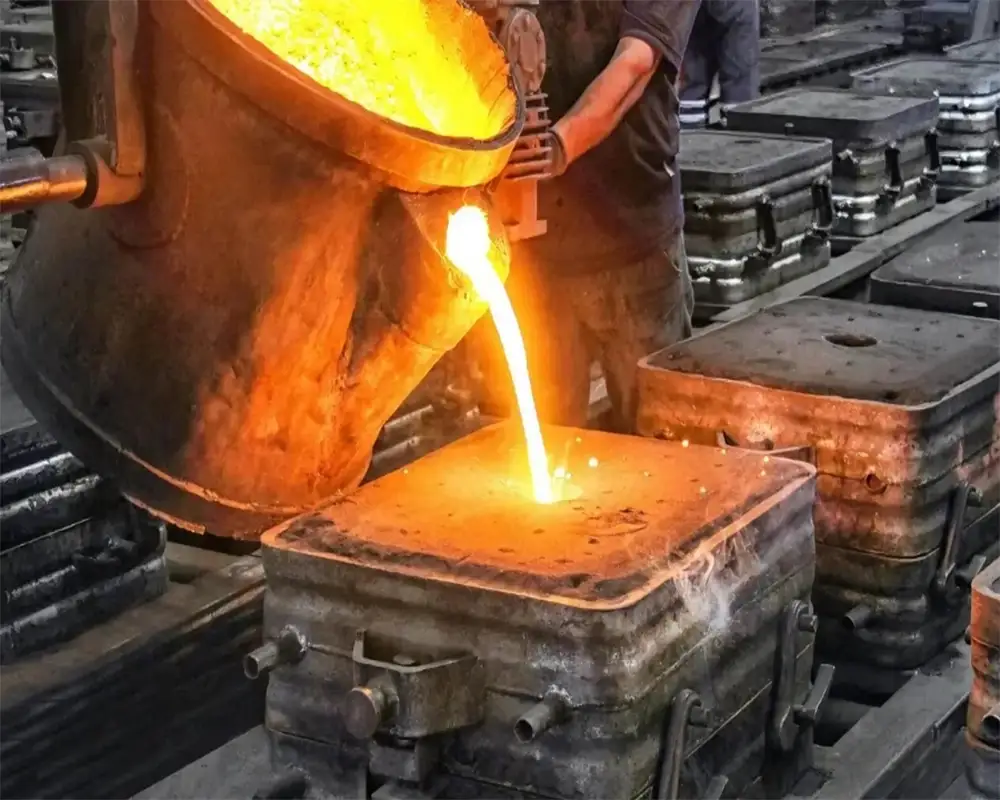
Casting involves melting and pouring metal into precision molds to form the valve body.
For high-pressure or high-temperature applications, forged steel is preferred for its enhanced strength and durability.
For a deeper comparison of material types, read Cast Steel vs. Forged Steel Ball Valves.
Step 2: Machining and Component Preparation
Once the cast or forged bodies are formed, CNC machining ensures precise dimensions and surface finishes. Every internal and external feature from the bore to the sealing surfaces must meet tight tolerances.
At CTGV, advanced CNC machines and automated production lines guarantee accuracy and repeatability across all product sizes.
Machining typically includes:
- Boring and facing the valve body
- Creating threads or grooves for sealing
- Polishing and deburring for smooth flow
This stage directly affects the valve’s sealing performance, torque control, and long-term reliability.
Step 3: Assembly and Seat Installation
After precision machining, the valve components, including the ball, stem, seats, and seals, are assembled with great care.
Each component undergoes individual inspection before assembly to ensure compatibility and dimensional accuracy.
Key assembly steps:
- Inserting the ball into the body cavity
- Installing soft or metal seats for leak-tight sealing
- Mounting the stem and actuator connection
- Applying torque tests to check rotational movement
CTGV’s in-house assembly lines are designed for efficiency while maintaining uncompromising quality standards.
Step 4: Pressure Testing and Quality Inspection
Testing is one of the most crucial phases of the ball valve manufacturing process. CTGV implements 100% inspection accuracy through rigorous pressure, leak, and functional testing for every single valve.
Common valve tests include:
- Hydrostatic pressure test: To ensure no body or seat leakage.
- Air leak test: To confirm sealing integrity under low-pressure conditions.
- Torque test: To verify smooth and consistent operation.
- Functional test: To ensure the valve opens and closes as designed.
CTGV’s testing procedures are in full compliance with ISO 5208, API 598, and other international standards.
Step 5: Surface Treatment and Coating

To enhance corrosion resistance and visual quality, the final valves undergo surface finishing and coating treatments.
These may include:
- Sandblasting for surface preparation
- Anti-corrosion painting or powder coating
- Nickel or chrome plating for aesthetic and protective finishes
This ensures that each valve maintains long service life, even in harsh environments such as offshore drilling or chemical plants.
Step 6: Final Inspection and Packaging
Before shipment, each ball valve goes through a final inspection phase, including dimensional checks, marking verification, and documentation review.
CTGV’s QA/QC team ensures every valve is traceable and accompanied by full material and test certificates. Once approved, valves are carefully packaged using moisture-proof and shock-resistant materials to prevent damage during transportation.
Why CTGV Excels in Ball Valve Manufacturing
CTGV stands out in the global valve industry due to its vertically integrated manufacturing system and engineering precision.
Here’s what sets CTGV apart:
- Full In-House Production: Every process, from casting to assembly, is done internally, ensuring consistent quality.
- Large-Scale Capacity: A 66,000㎡ facility and 20,000-ton annual production ensure CTGV can meet high-volume demands.
- Certified Excellence: Compliance with ISO 9001, API 6D, and CE guarantees world-class quality and reliability.
- Global Reach: CTGV supplies valves to major oil & gas, chemical, and energy companies worldwide.
CTGV’s combination of experience, automation, and craftsmanship ensures each valve meets the industry’s highest expectations.
To explore CTGV’s full range of high-performance valves, visit the Ball Valve Product Page and discover solutions engineered for durability, precision, and long-term reliability across various industrial applications.
Applications of High-Quality Ball Valves
CTGV’s precision-engineered ball valves serve across multiple sectors:
- Oil & Gas Pipelines – Reliable shutoff under extreme pressure
- Petrochemical Plants – Resistance to corrosion and high temperatures
- Power Generation – Smooth control of steam and water flow
- Water Treatment Systems – Leak-tight performance and longevity
- Marine and Offshore – Durable design for harsh operating conditions
Each valve type, whether floating, trunnion-mounted, or top-entry, is tailored for specific operational needs.

Conclusion
The ball valve manufacturing process is a complex, multi-step operation that requires technical expertise, precision equipment, and stringent quality control. CTGV’s in-house capabilities, from casting to final testing, ensure every valve meets global standards for safety, durability, and performance.
Through innovation, scale, and certified excellence, CTGV continues to set benchmarks in valve manufacturing, delivering trusted flow control solutions to industries worldwide.
Key Takeaways
- CTGV’s entire ball valve manufacturing process is completed in-house, ensuring quality and consistency.
- Each valve undergoes 100% inspection and testing under ISO and API-certified procedures.
- With a 20,000-ton capacity and 66,000㎡ square feet of facility, CTGV delivers scalable, high-performance valve solutions.

FAQs About the Ball Valve Manufacturing Process
Q1: What are the main stages of the ball valve manufacturing process?
A1: The process includes material selection, casting, machining, assembly, pressure testing, surface treatment, and final inspection.
Q2: Why is forging preferred over casting in some valves?
A2: Forged valves offer higher strength and are ideal for high-pressure or critical applications, while cast valves are cost-effective for general use.
Q3: How long does a CTGV ball valve last?
A3: With proper maintenance and operation, CTGV’s ball valves can last over 20 years, thanks to precision engineering and corrosion-resistant materials.
Q4: What certifications ensure CTGV’s valve quality?
A4: CTGV’s valves are certified under ISO 9001, API 6D, and CE, guaranteeing compliance with international standards.
Q5: Can CTGV customize ball valves for specific applications?
A5: Yes. CTGV’s engineering team designs customized valve configurations to suit unique industry requirements and fluid conditions.


